In the
meantime, however, the cathedral was in urgent need of repairs. By that time,
the structure was already rapidly deteriorating. Sections of the ceiling had
been damaged, and whenever it rained, water flowed freely inside the church.
The last major renovation of the cathedral had taken place in 1995, and the
effects of time and weather had already taken a heavy toll on the building.


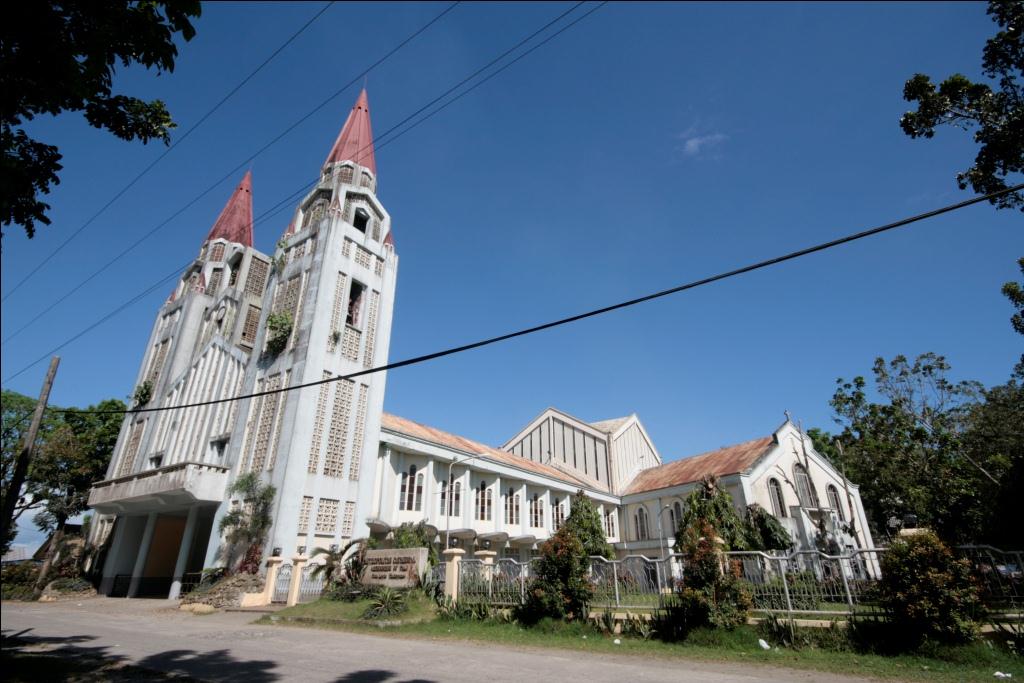


In the early morning of the fiesta of Palo on August 6, 2002, the Cathedral Rectory was razed to the ground by a fire that started in the abandoned Chancery building beside it. For the next eight years, the priests of the Cathedral lived in the Sisters’ convent located behind the burned rectory.
At that time, the parish priest, Fr. Stephen Pesado, decided first to construct a function hall on the ruins of the old Chancery. This building, now known as the Archbishop Cipriano V. Urgel Hall (ARCIVU Hall), was completed in 2004. The income generated from its rentals helped finance the construction of the new rectory, which began in 2005 during the tenure of Msgr. Ben Bacierra. Construction continued slowly in the succeeding years, and the project was only halfway completed when I was assigned to the Cathedral.
To fund the renovation of the Cathedral itself, Archbishop Palma decided that all the parishes of the archdiocese would contribute through a monthly quota. Freed from the responsibility of raising funds for the Cathedral renovation, I concentrated on securing resources for the completion of the rectory, which I believed should be finished before the major renovation of the Cathedral could begin.
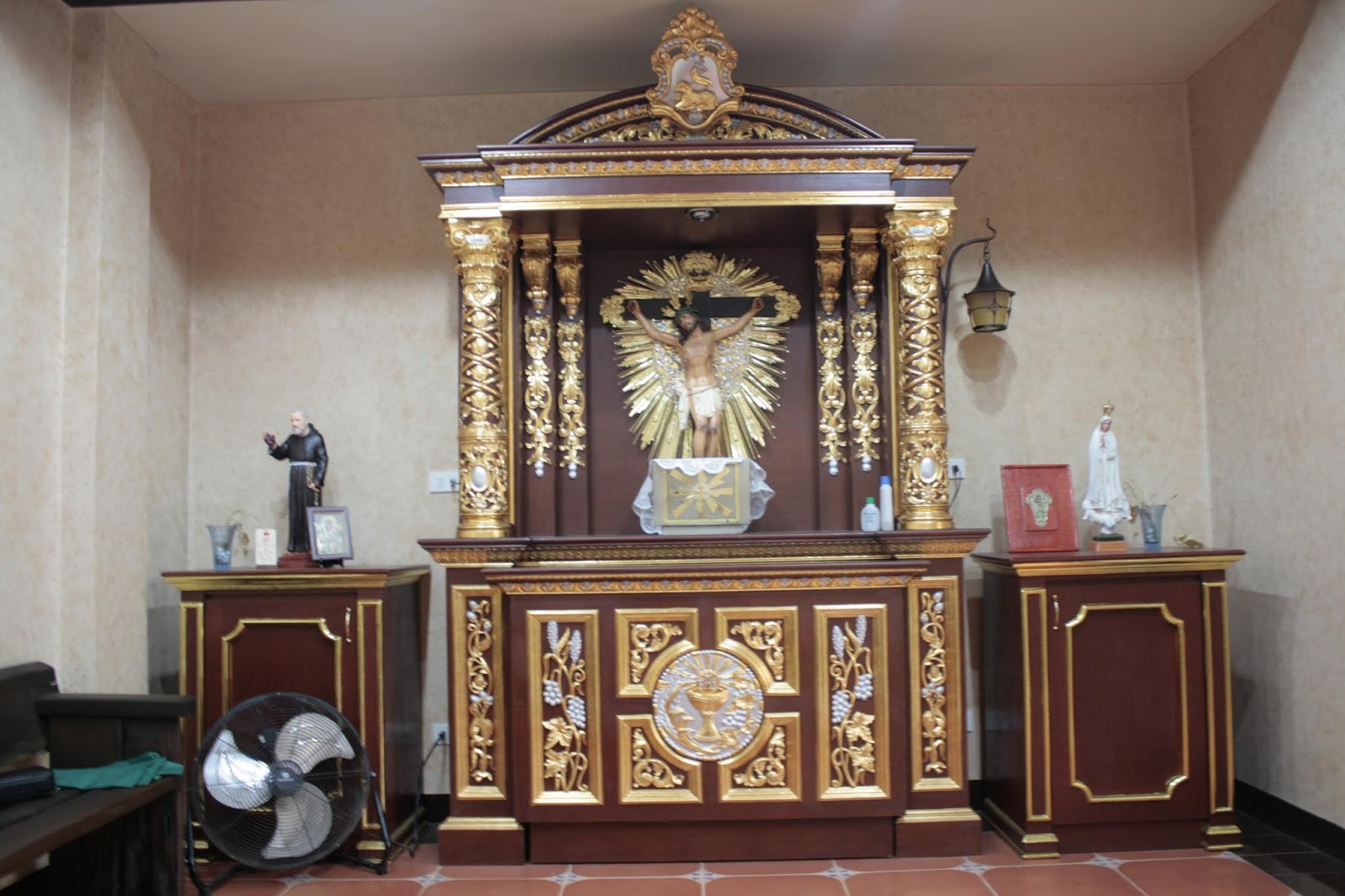
Seven months later, during the fiesta celebration of August 6, 2010, Archbishop Palma blessed the Parish Office and the private chapel of the new rectory. A month later, on September 5, 2010, he also blessed the dining room, bedrooms, and kitchen. The following month, the long-awaited renovation of the Cathedral finally began.




The
Archbishop chose the design submitted by Arch. Gervasio Amistoso. It
included the construction of a new dome to harmonize with the twin belfries,
the enlargement of the canopy over the main entrance, and the opening of two
additional doors beside it. The design also called for the installation of
mouldings inside the church and in the belfries, as well as the replacement of
the ceiling in order to unify the Cathedral’s interior architectural style,
among other improvements.
The major
reconstruction began in October 2010. The construction of the new dome proved
to be the most time-consuming aspect of the project and took more than a year
to complete. The windows were also replaced with awning-type windows, while the
doors along the main body of the church were repaired and redesigned as
two-panel doors that open outward.


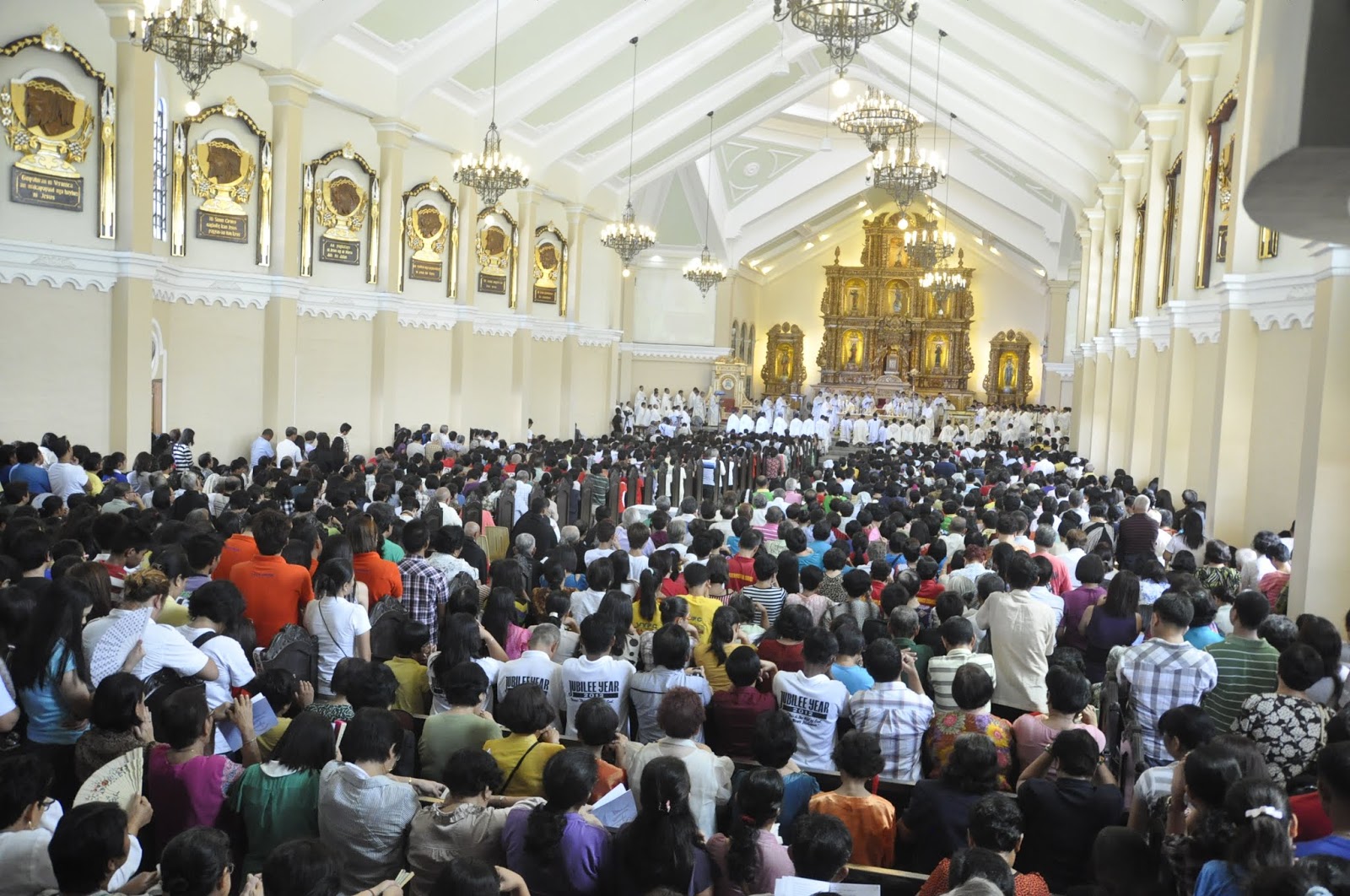
The carved Stations of the Cross were refurbished with gold plating, and the titles of the stations were carved directly onto the panels, replacing the meditations that had previously been painted on plywood. New pews were added, and the benches along the side wings were redesigned to match those in the main nave.
Four air-conditioned confessionals were installed, and a baptistery was constructed near the main entrance. A gallery of saints, together with a space for votive candles, was also added. Chandeliers were installed along the main nave to match those already hanging in the side wings.
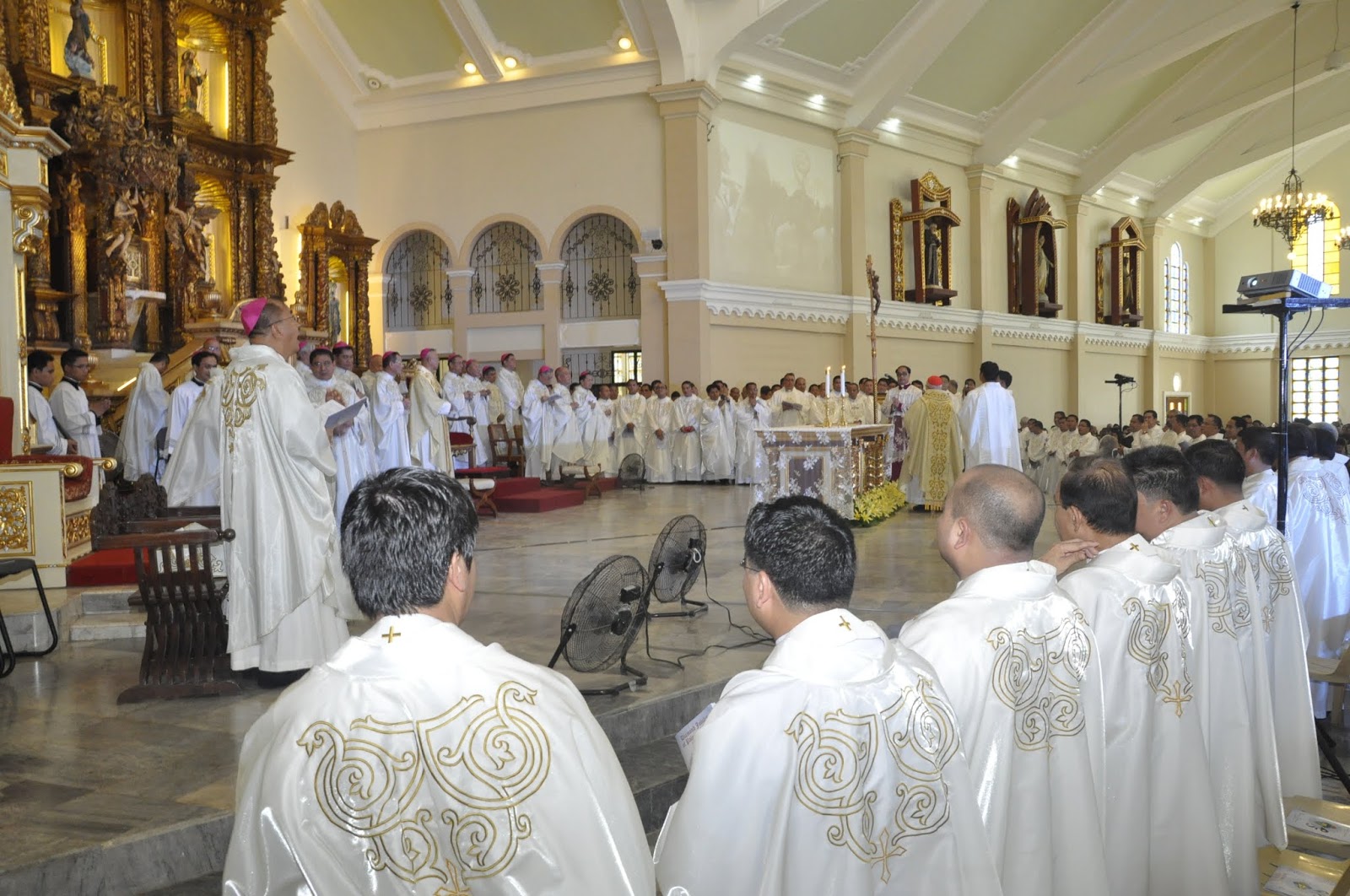
The sacristy was likewise renovated, and a new bishop’s sacristy was created by converting the Burabod Chapel located across from the old sacristy. A new cathedra was installed in time for the installation of the new archbishop, John F. Du, in May 2012. A new altar table and lectern were also put in place shortly before the celebration of the Diamond Jubilee.
To complete the renovation, a new road was constructed at the end of the Sacred Heart Plaza in front of the Palo Metropolitan Cathedral, creating a new approach to the Cathedral so that visitors could immediately appreciate the grandeur of its newly renovated façade upon entering the grounds.
The entire renovation was completed in time for the Diamond Jubilee celebration of the diocese on November 27, 2012.




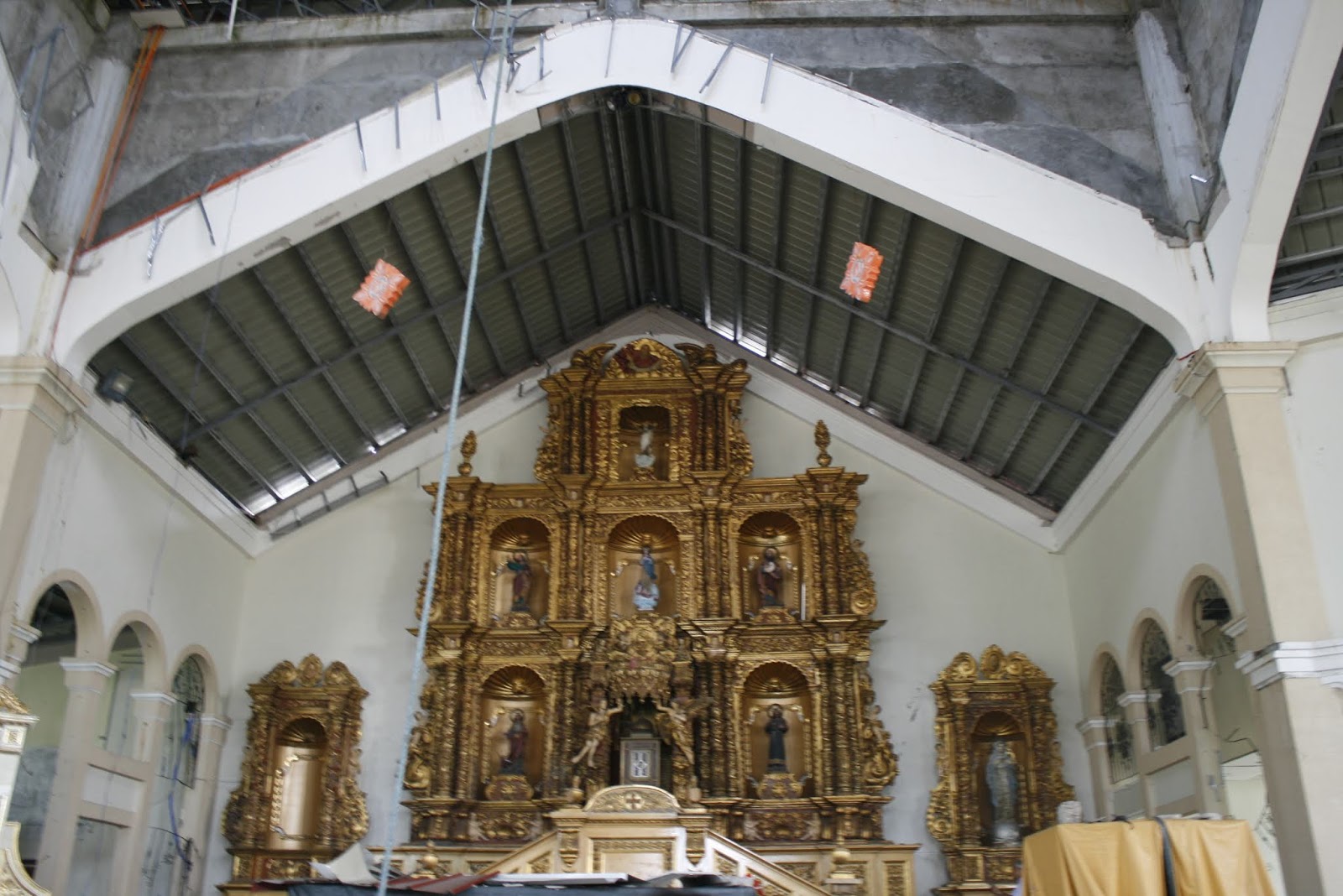
The archdiocese was about to close the year-long Jubilee when Super Typhoon Yolanda struck. On that fateful day of November 8, 2013, the powerful storm—packing winds of more than 300 km per hour—blew away the dome and ripped off the roof of the entire Cathedral. The Cathedral Rectory was also badly damaged, and the ARCIVU Hall was totally wrecked.
In less than a year after its renovation, the Cathedral was once again devastated, even more severely than before.




.JPG)
.JPG)
.JPG)
.JPG)
.JPG)
The image of Our Lady of Hope of Palo was carved by Willy Layug. It depicts the Blessed Virgin Mary and the Child Jesus extending a rosary to a distressed child, symbolizing the victims of Typhoon Haiyan. The image stands on a globe surrounded by waves, an allusion to the devastating typhoon.
This image was blessed by Pope Francis during his visit to Tacloban City in 2015.
a.jpg)
.JPG)
.JPG)
.JPG)
.jpg)
No comments:
Post a Comment