When Cebu Pacific had a Piso
Sale, I took the opportunity to buy tickets to Ozamiz, a place I had never been
to before. Then I noticed on the map that the nearest airport from Ozamiz was
Pagadian. Since I had never been there either, I decided to fly back to Manila
from Pagadian. In that way, I would be able to visit two provinces in just one
trip: Misamis Occidental and Zamboanga del Sur. The ticket from Pagadian to
Manila was even cheaper than that from Ozamiz.
I also bought tickets for my
friends Ronnie and Mark, whom I was sure would come along.
We were met at the airport by
Julian, the driver of my classmate Msgr. Max Naron, who is the Vicar General of
the Archdiocese of Ozamiz. When I texted Max the week before to inform him that
I would be visiting Ozamiz, he assured me that there would be a car and a
driver-guide who would bring us to the places we wished to visit.
From the airport we went directly
to the Archbishop’s residence, where we were billeted. We had breakfast and
placed our things in our room. The second floor of the residence has a good
number of rooms, as priests usually stay there every Tuesday. The bishop and
the resident priests stay downstairs. Archbishop Dosado was not there when we
arrived, as he was in Cebu for an eye checkup.
One of the first things we
noticed about the residence was the number of doors. Even just to go from the
lobby to the dining room, we had to pass through at least three doors.
Julian told us that Msgr. Max had
prepared for a beach outing, as I had requested. So after breakfast we
immediately went for a short city tour so we could later catch up with Max.
We first visited the cathedral.
We also went up to the choir loft to see the pipe organ that had recently been
repaired. Judging from its size, I think this might be the biggest pipe organ
outside Manila. Aside from the keyboard near the organ, another keyboard has
been placed near the altar, where the choir now usually sings. We also met
briefly the parish priest, who is also the diocesan oeconomus.
We made a short stop at Gaisano
Mall to buy some shirts. Then we went to the port where we visited the Cotta,
or Virgen sa Cotta, a shrine of the Immaculate Conception whose bas-relief
image is attached to the wall of the fort. It is somewhat like the outdoor
shrine of Pilar in Zamboanga. Known to be miraculous, the Cotta attracts
several pilgrims every day.
The feast day of the Cotta is
celebrated every July 16, the feast of Our Lady of Mount Carmel. Our guide
mentioned that since the place is on public land, Masses before were said not
only by Catholics but also by the Aglipayans. Now the Aglipayans have retained
only their donation box, which is situated at the entrance to the image of the
Immaculate Conception, while the Catholics have theirs at the exit of the
shrine.
We took some pictures at the
entrance of the fort beside the Cotta, called Fuerte de la Concepcion y del
Triunfo, which was built in 1756.
 |
| Airport of Ozamiz. |
 |
| The chapel in the Archbishop's residence of Ozamiz. |
 |
| A hall at the second floor of the Archbishop's residence where priests usually gather every week. |
 |
| The garden at the Archbishop's Residence. |
 |
| One of the halls at the second floor of the residence. |
IMMACULATE CONCEPTION CATHEDRAL
Ozamis City, Misamis Occidental
Founded: 1811
 |
| The facade of the Cathedral of Ozamis |
 |
| Inside the Cathedral. |
 |
| The pipe organ of the Cathedral was newly repaired. It is said to be the second biggest pipe organ in the country. |
 |
| The pipes of the organ. |
 |
| The main keyboard. A smaller keyboard was also installed near the altar where the choir usually would stay. |
 |
| A tall statue of St. Augustine at the left side facing the Cathedral to commemorate the Agustinian recollects who were among the missionaries of Ozamis. |
 |
| The statue of St. Ignatius of Loyola on the right side facing the Cathedral in commemoration of the Jesuit missionaries who evangelized the place. |
 |
| The facade of the Cathedral with the statue of the Immaculate Conception below the pediment. |
 |
| The Shrine of the Virgen sa Cotta. |
 |
| The Shrine is part of the park just near the sea |
 |
| Many pilgrims would visit everyday the Shrine. |
 |
| A family praying before the image of the Virgen. |
 |
| Just beside the Cotta sa Virgen is this main entrance to the fort called Fuerte de la Concepcion y del Triunfo. |

From the Cotta we went to the
parish of Msgr. Max in Tudela, which is only 11 kilometers from Ozamiz. He was
no longer at the convent when we arrived, so we hurriedly left for the MOAP
(Misamis Occidental Aquamarine Park) in the next town of Sinacaban, where Max
was already waiting for us.
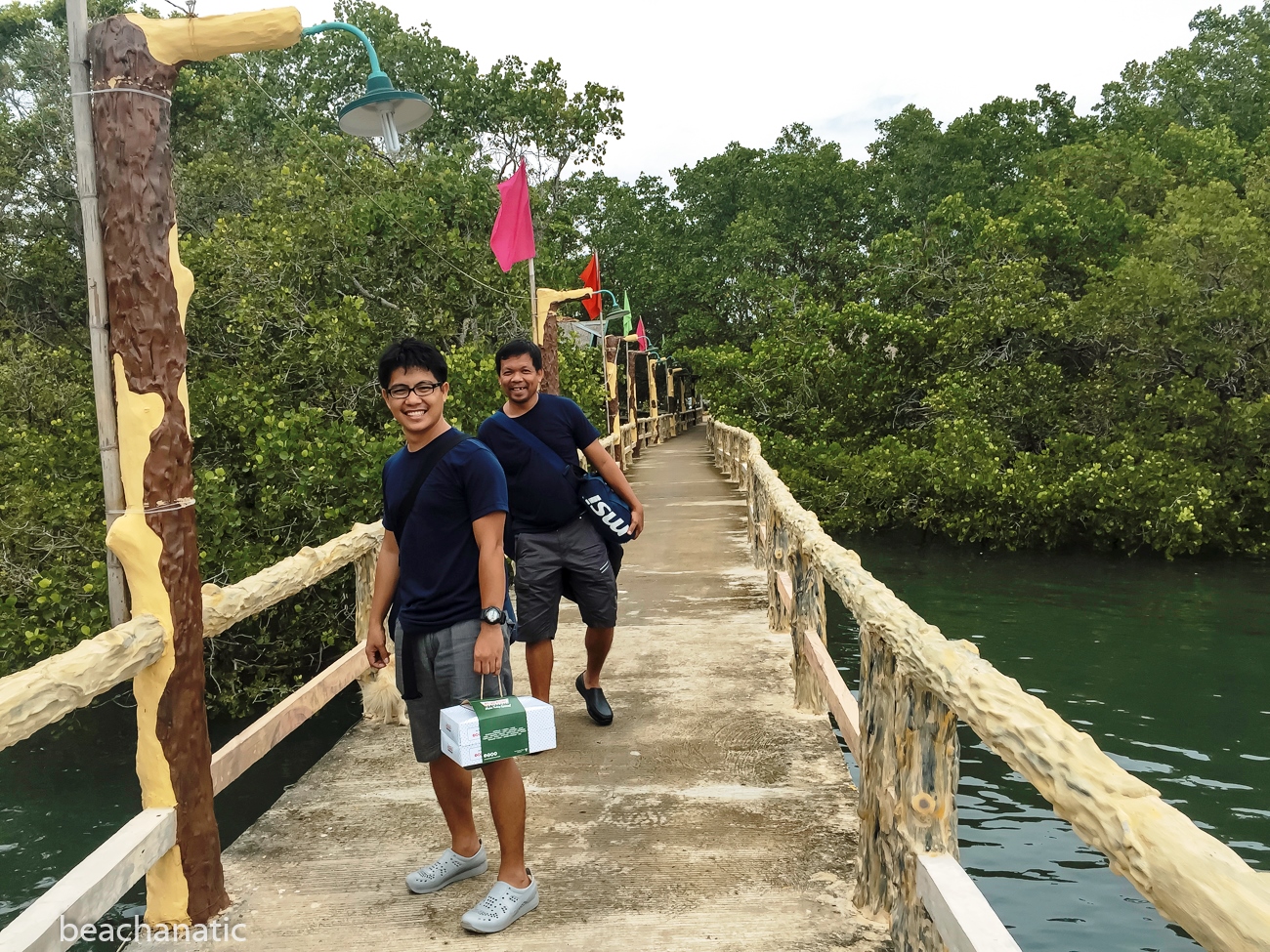
The MOAP has about 200 meters of
concrete walkway extending toward the sea, with a restaurant at the end.
Another building nearby over the water was also under construction to serve as
a hall. The place is operated by the provincial government. However, our
destination was an island—or rather a sandbar—about one or two kilometers from
the mainland.
The place used to be called
Dolphin Island because until about a year ago it had trained dolphins that were
open to the public for viewing and interaction. The resort was closed after a
civil case was filed against the investor who had developed the area.
Apparently, the former governor had entrusted the development of the place to
this investor. Conflict arose when the new governor, who belonged to the
opposition, no longer showed interest in the project. As a result, the former
governor and the investor were taken to court. While the case is pending, the
court ordered the place closed.
In the meantime, the province
took over the administration of the area. However, since no support was coming
from the government, the caretakers eventually freed the remaining dolphins.
Since the caretakers were friends
of Max, this was where he brought us. We practically had the whole resort to
ourselves that day.
A small motorized boat, with a
paddle boat tied to it carrying some of our companions, brought us to the
place. Because it had to tow another boat, our speed was very slow—almost like
paddling.
Dolphin Island is not really an
island but just a sandbar. In fact, when we arrived there was no sand to speak
of; the entire place was surrounded by water. It was only when we were about to
leave, as the tide was going down, that the sandbar slowly began to appear.
We had an early lunch there and
then went snorkeling afterward. Two guides from the province accompanied us. We
explored the corals and noticed a steady growth of soft corals on the concrete
posts of the resort. We also looked for the large groupers and snappers that
used to inhabit the area, but we could no longer see them. There were still
sixteen giant clams remaining.
While we were eating, the
caretakers entertained us with spooky stories about their experiences while
guarding the place at night. They said they would often hear voices calling
them in the evening, coming from near the toilet area and the engine room.
On one occasion, they rescued
some fishermen whose boat had capsized nearby. They brought the men to the
resort and gave them rice which they could cook at the other end of the
facility. But sometime past midnight the fishermen went back to the caretakers
asking permission to leave, saying they could not sleep because of the strange
sounds they kept hearing.
The weather that day was simply
lovely. It was cloudy, but the sun would shine gently from time to time—perfect
conditions since we had not brought any sunblock. It rained briefly while we
were swimming, but the rain stopped just as we boarded the boat for our trip
back to shore.
SAN ISIDRO LABRADOR PARISH CHURCH
Tudela, Misamis Occidental
Founded: 1938
 |
| Facade of the newly renovated church of Tudela. |
 |
| Inside the church of Tudela. |
Then we went to the town of Jimenez to see the oldest church in the province of Misamis Occidental. The ceilings still had geometric paintings, and the church also had a pipe organ. We went up to the belfry to see the old bells and the weights that were part of the old church clock, which had recently stopped working because one of its parts had been stolen.
We also went to the cemetery to see the centuries-old balete tree. From there we returned to Ozamiz and went back to the Archbishop’s residence. There was a heavy downpour as we were making our way back.
Max later joined us for dinner at the residence. Before supper we had some beer in the lounge on the second floor, where there was also a billiards table.
After breakfast we left the Archbishop’s residence for our trip to Pagadian. Our first stop was the College Seminary of Ozamiz, St. John Paul II College Seminary, where they keep the chair used by Pope John Paul II in Manila during the World Youth Day.
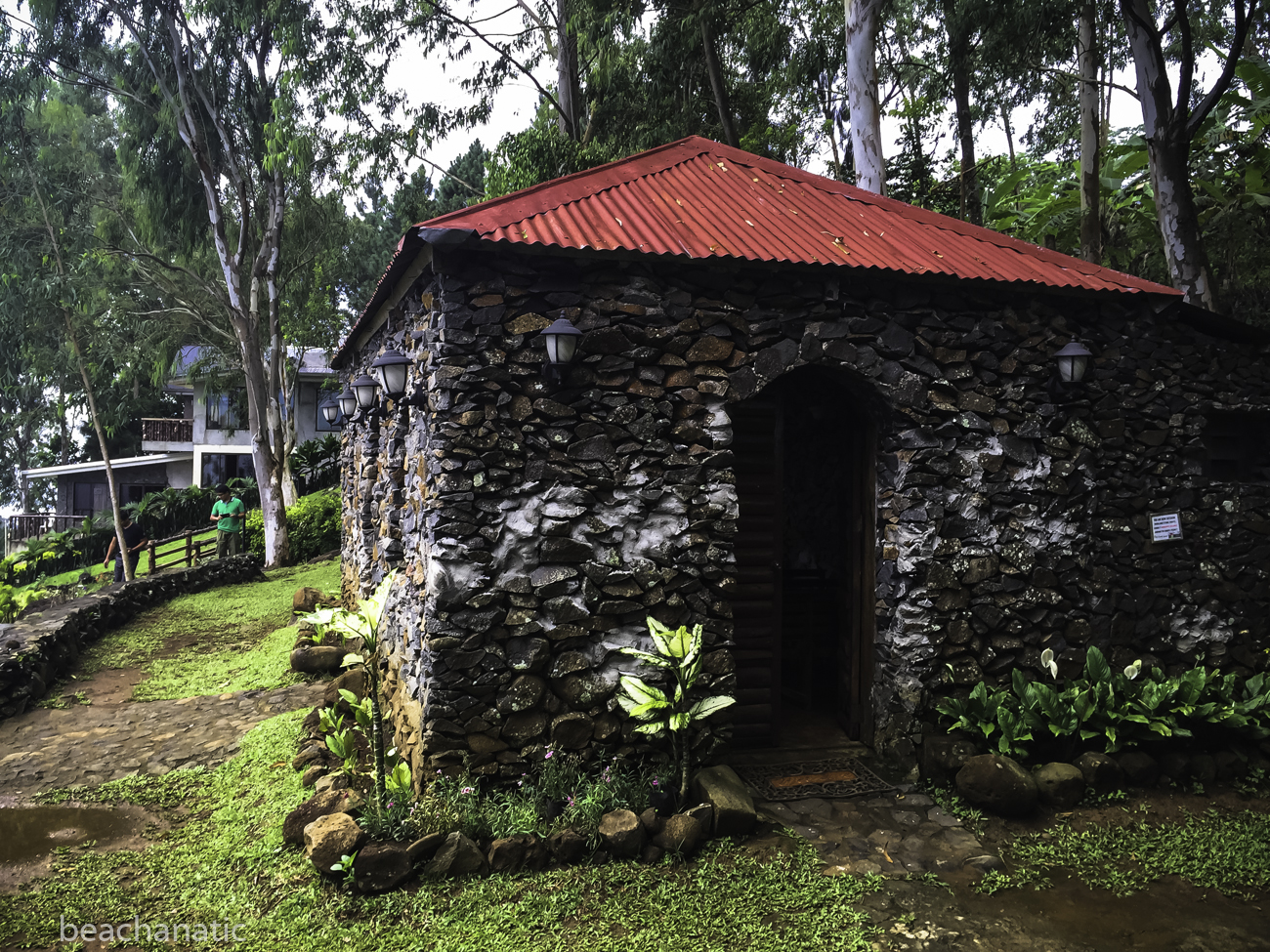
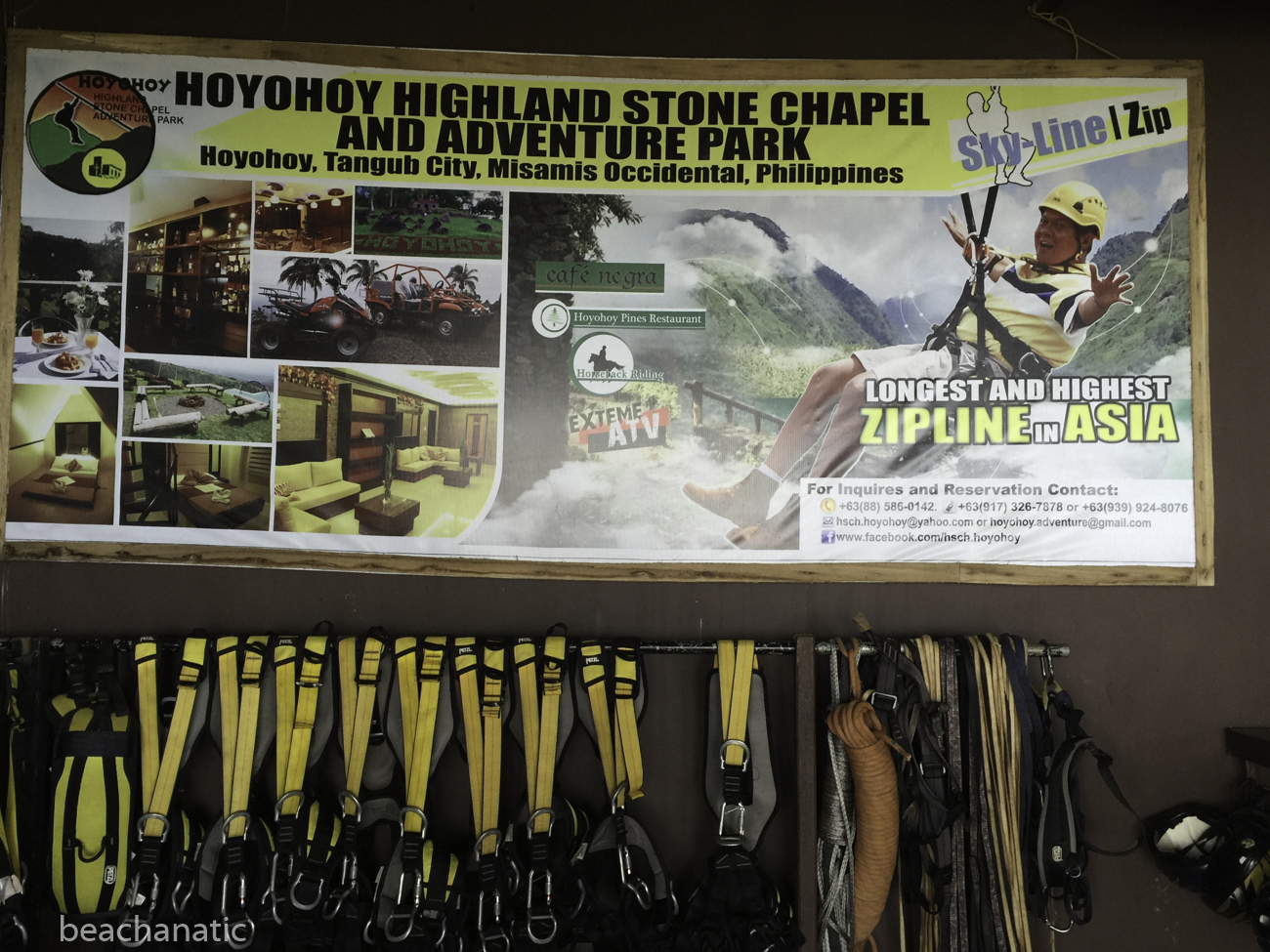
Our next stop was the Hoyohoy Highland Stone Chapel and Adventure Park in Hoyohoy, Tangub City. We rode the zip line that traverses the mountain on the Tangub side to another mountain on the Ozamiz side. The ride was 1.25 kilometers one way and 1.1 kilometers on the return, at a height of about 850 meters.
The zip line experience itself was rather uneventful. We enjoyed the buggy ride back to the first station much more. Over craggy rocks, sudden turns, and steep inclines, the buggy maneuvered impressively well.
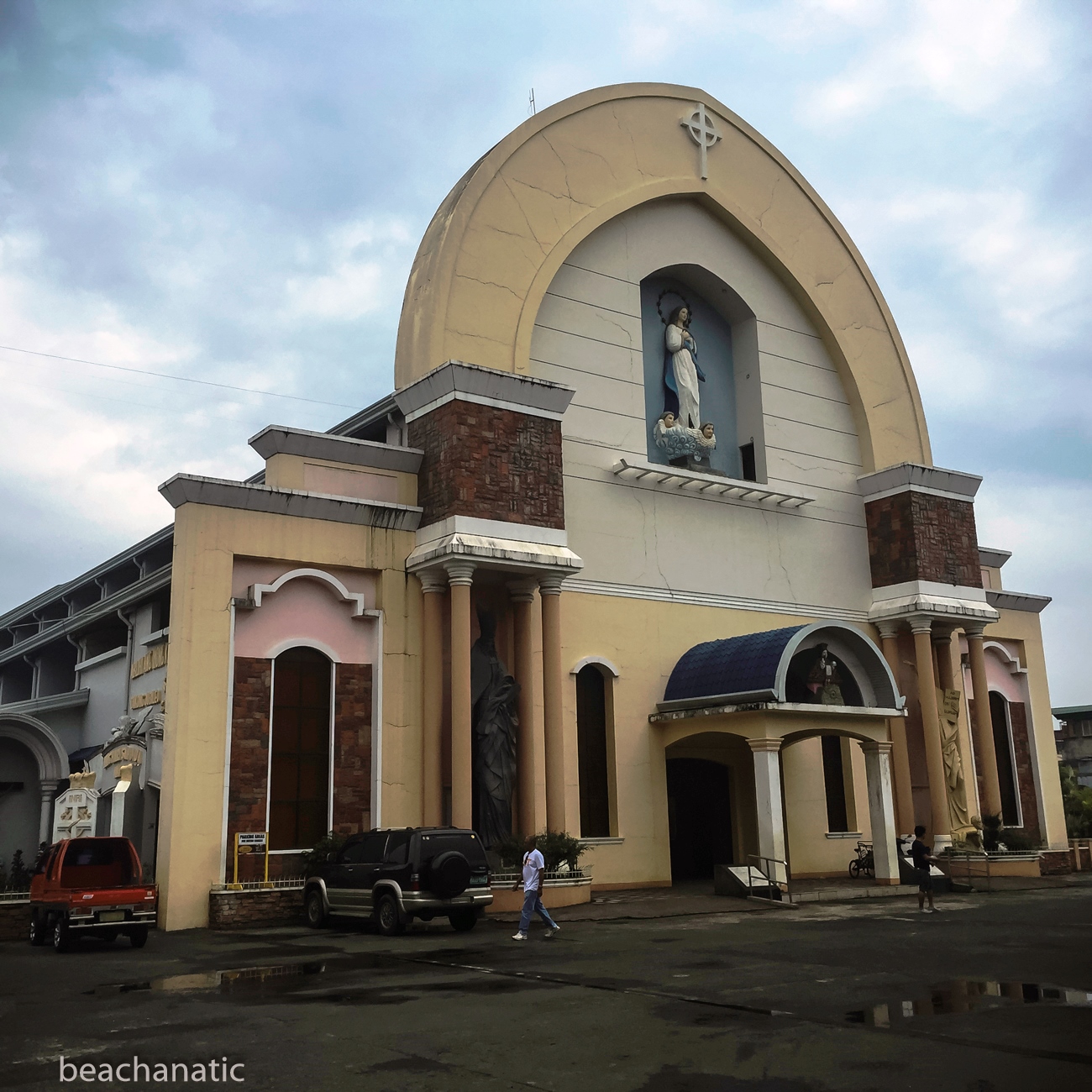
Next we went to the port in Tangub, where the proposed Panguil Bay Bridge will be built, connecting the area to Lanao. We also visited the parish church of Tangub. After that we had a short break by the church in Bonifacio, where we bought some longkong lanzones and mangosteen.
We had lunch at a self-service restaurant in Molave, Zamboanga del Sur. From there we went up to Eriberta Spring Resort in Barangay Diwan, Molave, about five kilometers from the town proper along an unpaved and rocky road. We took the opportunity to have a short dip in the cold spring waters.
ST. MICHAEL THE ARCHANGEL PARISH CHURCH
Tangub City, Misamis Occidental
Founded: 1935
Upon reaching Pagadian, we first visited the cathedral. We then went to the C3 and Gaisano malls and rode their tricycle, which is uniquely built with the passenger seat inclined at an angle of almost 45 degrees.
It was already evening when we arrived at the Bishop’s residence, where we would be staying for the night. Supper was already prepared. We met two of the priests who were residing at the house. The bishop was still out as he had another engagement. I noticed that one of the priests seemed ill, perhaps recovering from a recent stroke. He still had a speech impediment and his left hand did not seem very strong yet. While we were eating, a Nigerian priest from the Spiritans, who was assigned in Iligan, joined us.
The Bishop’s residence was designed in such a way that it would remain cool at all times, so there were no air-conditioners in the rooms. The windows had screens with wider openings to allow more air to pass through. Because of this, each bed had a mosquito net already set up, fixed in place by tubular poles surrounding the bed.
The following day, while I was having coffee before leaving for the airport, I met Bishop Cabajar, who was also departing for Iligan for a Bishops–Ulama meeting. I also met their vicar general and the superintendent of Catholic schools, who resides at the house.
My flight was scheduled for 9:20 a.m., while Mark’s and Ronnie’s flight was at 7:20 a.m. I joined them on the ride to the airport, hoping that my flight could be changed so I could join them on the earlier departure. Unfortunately, my request was denied. However, as a small consolation, they transferred my seat—which I had already checked in online—to a better window seat near the front of the plane.
Since I still had some time to spare, Julian and I went back to the city for a short sightseeing trip. We went to a lookout point that offered a beautiful view of the whole city of Pagadian. The building was still under construction, however, and we were only able to go up to the second floor because the tower itself was closed.
We then went to the city port and took some pictures of the salted-fish market before heading back to the airport.