On my second visit to Digyo, I found that the island has very good coral growth. The corals come in different sizes and colors which I failed to discover in my first visit. The corals are located in the western part of the island facing the island of Apid. There are no corals in the part facing the mainland of Leyte. This time, we were with our convent personnel and parochial vicars. We also stayed overnight camping at the beach.


The island above is Apid just across Digyo. There is an existing barangay in this island.


The panoramic view of the island of Digyo.

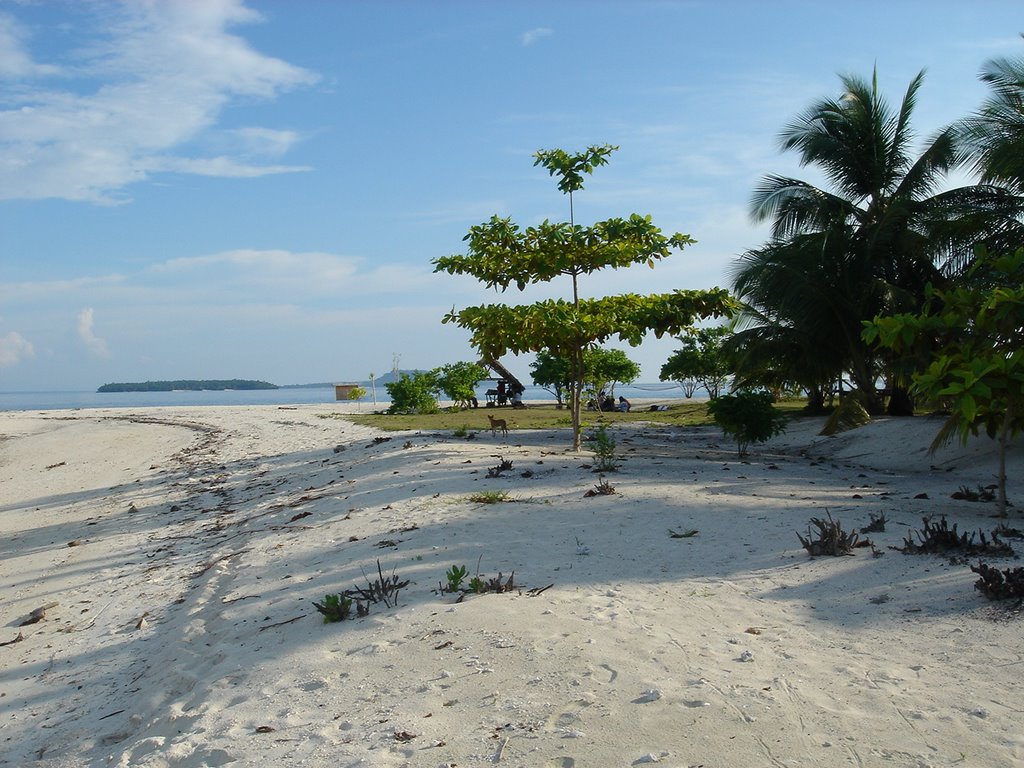
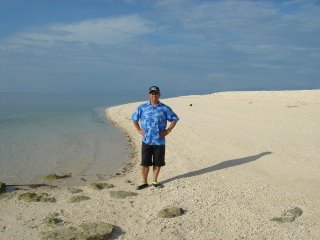
I have heard of Digyo Island (pronounced as Dijo) for sometime already but I never thought it would be that beautiful. It is a gem of an island that awaits to be discovered. It is the smallest among four neighboring islands popularly known as Quatro Islas which includes Apid (there are settlers here and is already a barangay), Mahaba, Digyo and Himukilan. The first three islands belong to the town of Inopacan, Leyte while the last belongs to the neighboring town of Hindang. Digyo with its white sandy beaches is a nesting site of sea turtles. An information board on the beach announces it. The island is so small that one can leisurely walk around it in fifteen minutes. At present there are some people residing on the island who are its caretakers. As the island is privately owned, they charge ten pesos a day per person and a hundred pesos for the use of the kiosk. There is a good place for snorkeling as there are vegetations and some corals teeming with small colored fishes and on another part just nearby a good place for swimming as the water is so clear and shallow.
Last October 30, 2006 together with 12 members of the Sts. Peter & Paul parish youth, Frs. John Paul and Aaron and a seminarian, we camped overnight at the island. The timing was so perfect and we had such a wonderful stay. The sea was so calm in spite of the typhoon that was raging in the north of the Philippines and in the evening the moon was shining brightly with plenty of stars to gaze at.
From the main town of Inopacan, Digyo was forty minutes away by pumpboat. The travel would surely have been cut into half if the boat was a little faster.
 The parish youth enjoying their outing on an island away from the parish, which is a first after several years.
  Tres Marias inside one of the tents that we used for the night.
  Fr. Aaron enjoying the sand of Digyo by the hammock.
 Fr. John Paul who can hardly swim loses his fear of the water and enjoys the clear waters of Digyo.
The sunset in Digyo was lovely, but the sunrise on the island as shown above was just spectacular. And to think that was my birthday. What an amazing gift that was!
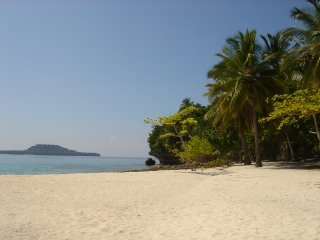 The picture above was taken from the white sand beach of Mahaba. The island at the background is Himukilan. There is a coral reef just a few meters away from the beach of Mahaba. The sea drops off suddenly and on the wall one can see the corals and fishes.
 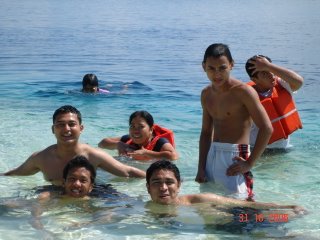 The youth frolicking at the waters of Mahaba