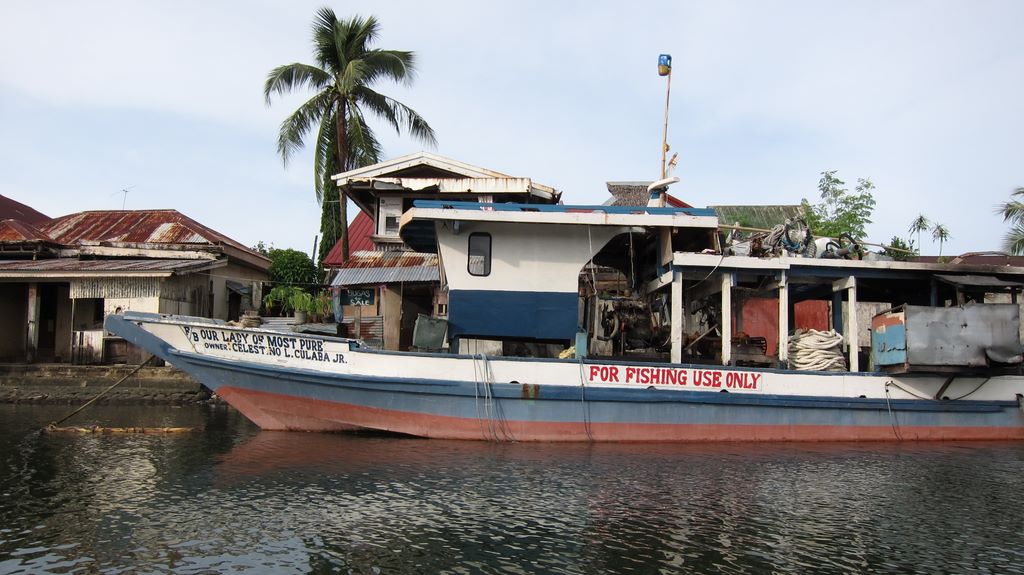
It had been quite some time since I first heard about Malaguicay Falls. Priests who had been assigned to Abuyog, as well as to the mission station in Sta. Fe, Abuyog—which had recently been erected as a parish and to which Malaguicay now belongs—had been inviting me to visit the place. More than the falls itself, however, what intrigued me most was the adventure of getting there.
Facing the Pacific Ocean, Malaguicay and the neighboring coastal barangays become inaccessible at certain times of the year because of the strong waves. This is not immediately apparent from the port in the town of Abuyog, which is ideally situated along a bend in one of the tributaries of the large Abuyog River. Here, boats coming from the barangays along the coast and the river converge.
For those traveling to coastal barangays like Malaguicay, however, the thrill and excitement begin as soon as the boat reaches the mouth of the river. The clash between the ocean current and the rushing waters of the river creates treacherous waves that even experienced boatmen find difficult to navigate. Innumerable boats have capsized in this area, resulting in more than a few casualties.
Indeed, during the Habagat season, when the seas become rough, these coastal barangays can be cut off from supplies coming from the town, sometimes for months on end. The communities then have little choice but to fend for themselves. Bounded by the sea on one side and the mountains on the other, they have very little flat land on which to grow rice. They sustain themselves on the vegetables and root crops they are able to cultivate, while coconuts are the principal produce of the land. Their main source of livelihood, however, is the sea—which, during these months, can become decidedly unfriendly.
It was my assistant priest, Fr. Kim, who first suggested that we go to Malaguicay Falls after I mentioned that we might spend our day off at the beach. He had just been assigned to Abuyog, so he immediately contacted people who could arrange a boat and prepare our meals. We invited other priests who were available that day, and eventually eight of us made the trip to Malaguicay.
It was a perfect day—not too sunny, with no rain, and the sea was relatively calm. On our return trip, our boat still had to maneuver from right to left to avoid the waves and strong currents, but we were told that these were nothing compared with the conditions the boatmen regularly encounter. The boat ride took only about forty minutes.
What immediately caught our attention upon arriving in Malaguicay were the many beautiful houses, mostly two-storey structures, standing in such an isolated place. We were told that many of the young women from the barangay had married foreigners, bringing a certain degree of prosperity and development to the community. In fact, there is a local joke—perhaps with some truth to it—that families consider themselves fortunate when they have daughters. Some of those who married foreigners would later introduce their friends and relatives to other foreigners as well.
I was told that fiesta time is a grand homecoming for many of them. During the disco on the vesperas of the fiesta, the kuratsa is especially anticipated, as money can literally fly across the dance floor, with participants trying to outdo one another in giving the biggest abwag.
The kuratsa is a traditional courtship dance popular in Leyte and Samar. During the dance, not only the dancers but also the spectators throw money onto the dance floor as abwag, sometimes to “redeem” a dancing partner who has been playfully “floored.” Over time, the kuratsa has also become a popular means of raising funds during fiestas and other social occasions.
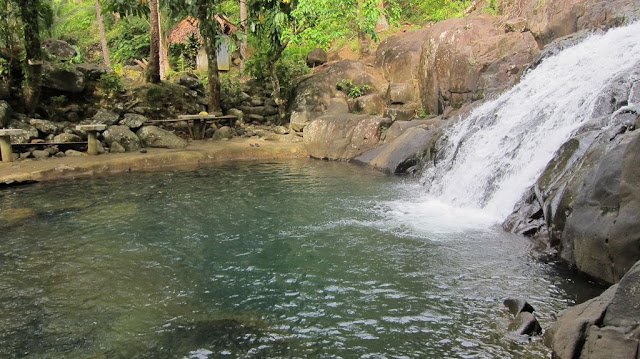
The falls itself was not far from the barangay, requiring only about a fifteen-minute walk. It was neither particularly high nor was its pool very large. There were two covered cottages, with several tables scattered around the pool area. Since we were the only guests that day, however, the place was perfect for us.
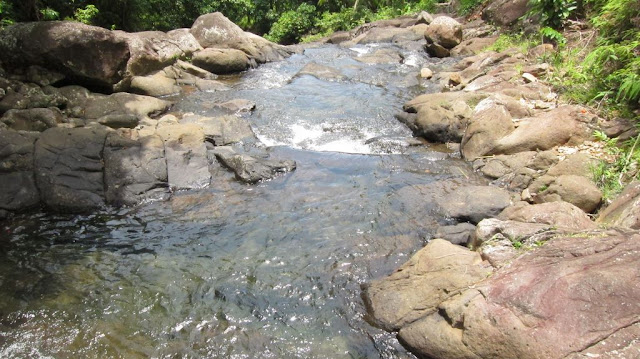
Climbing above the falls, we discovered shallow sections where the water cascaded strongly over the rocks. Simply sitting in the rushing water gave us a wonderful natural Jacuzzi massage.
The trip was also surprisingly inexpensive. The boat, which could accommodate a maximum of thirty persons, cost ₱1,800 to rent. Entrance to Malaguicay Falls was only ₱10 per person, while the rental of a cottage was ₱200.

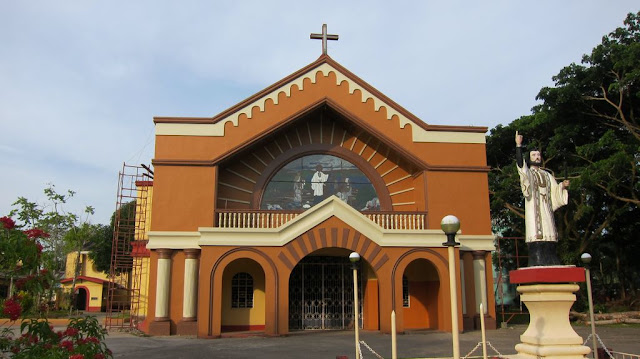
The Parish Church of Abuyog, Leyte is getting a new paint in time for its fiesta on August 29.
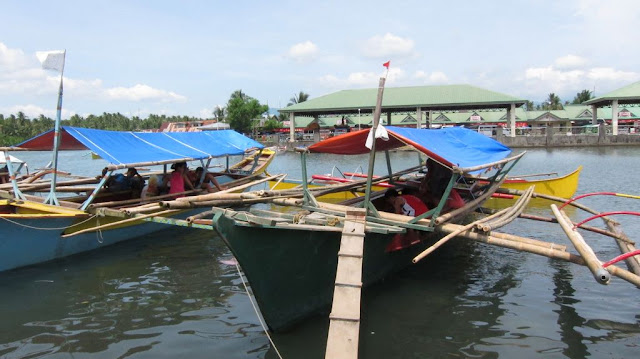
The boat that will take us to Malaguicay anchored at the port of Buntay.

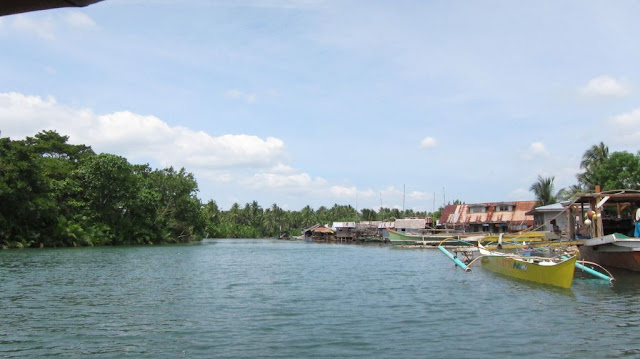
The sights along the river before going out into the open sea.
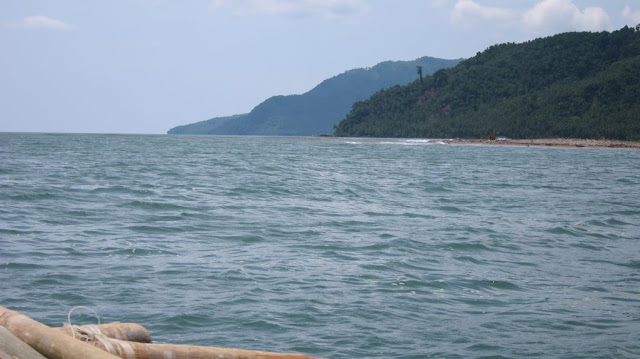
The mouth of the river where it meets the sea.
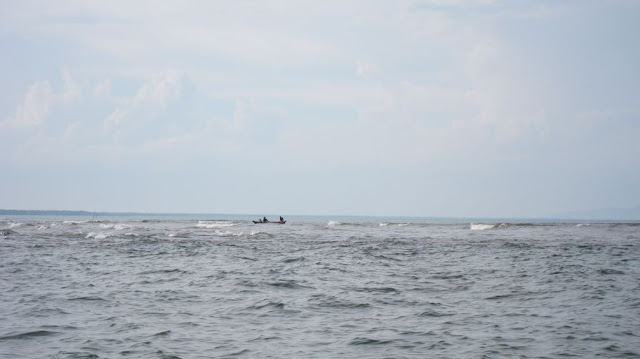
On certain times of the year, the waves at the mouth of the river would be so treacherous that boats would not dare go out into the sea leaving the people living along the seacoasts out to fend for themselves as they they have no way of getting to the main town to get their provisions.
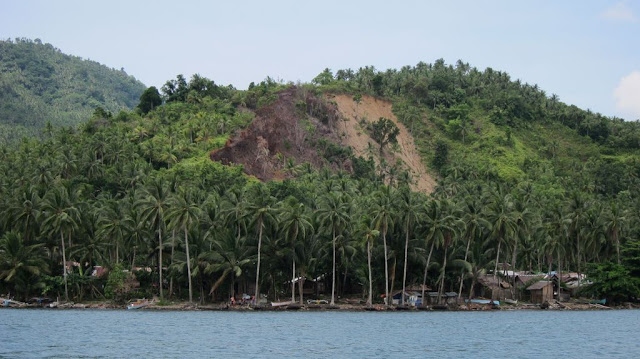
As we approached the barangay of Malaguicay we noticed a landslide just near the barangay.
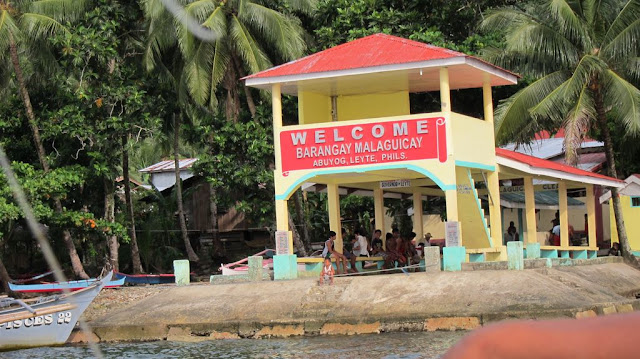
The pier in Malaguicay.


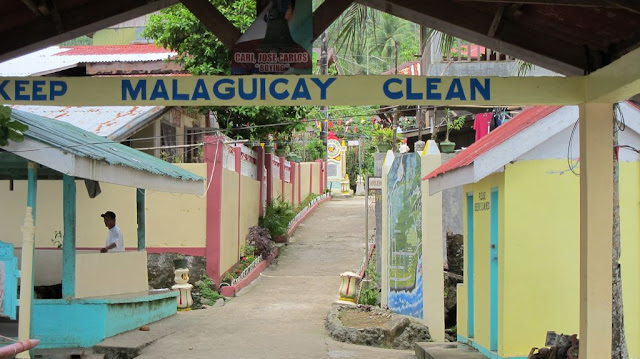
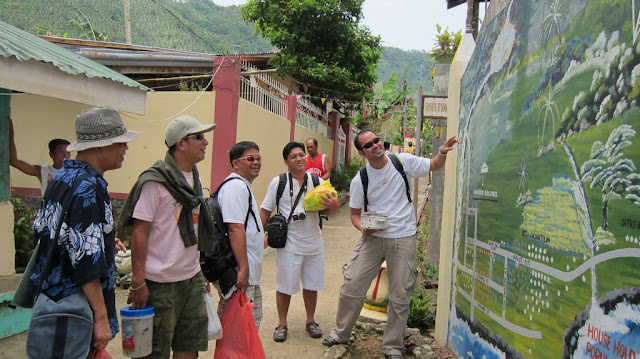
A map of the barangay is painted along the fence walls just near the port.

In this map Malaguicay Falls is at the upper left side, which is not far from the barangay.

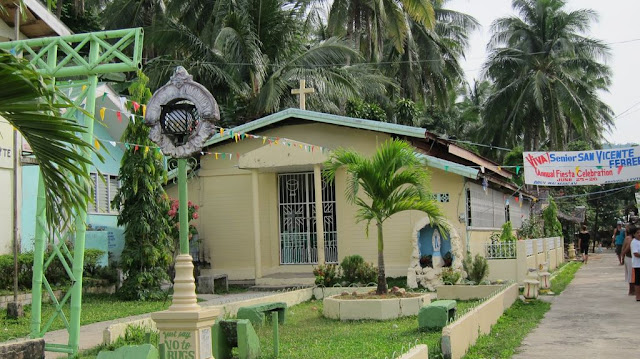
Thne barangay chapel of Malaguicay in honor of St. Vincent Ferrer
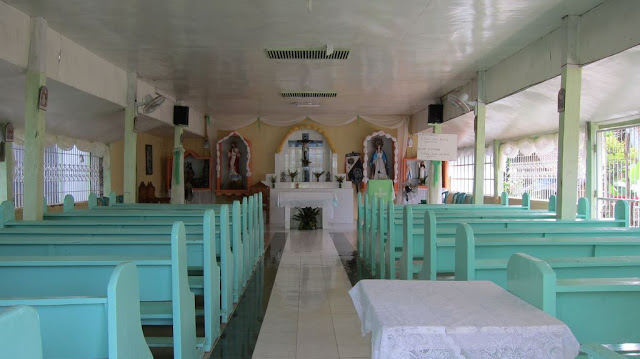
View inside of the chapel


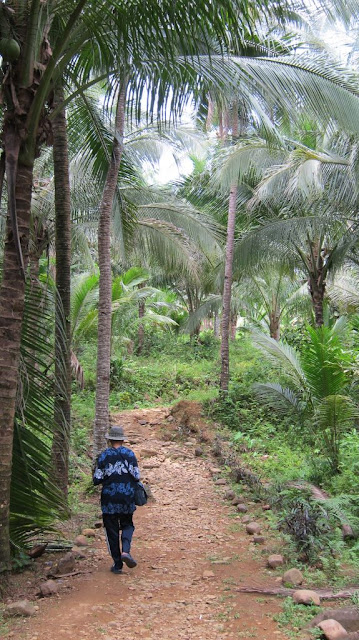
The path leading to the falls.


Malaguicay Falls was just about half kilometer away from the beach.


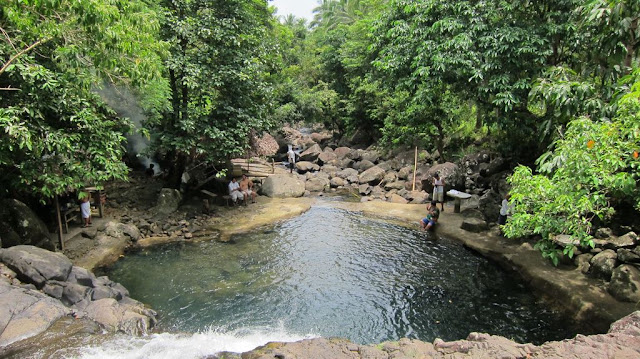
A panoramic view of the Malaguicay Falls from on top.


 The Cathedral of Puerto Princesa.
 The St. Exequiel Moreno Spirituality & Development Center of the Agustinians where we had our retreat.
 Beautifully landscaped swimming pools.


 The restaurant at the Dos Palmas. Lunch was included in the tour.


 Kayaking around the island and mangroves is one sport that is worth doing at Dos Palmas. The resort has also mountain bikes for touring around.
 The fishes have become tame that they always await to be fed.

 Pambato Reef
 A long stretch of white sand beach with very few tourists.
 A strong rain suddenly poured down while we were island hopping after the visit to the Dos Palmas.
 A visit to the Crocodile Farm


 Entrance to the Baker's Hill